



Calcium Channel
Ca2+ channels; Ca channels
Calcium channel is an ion channel which displays selective permeability to calcium ions. It is sometimes synonymous as voltage-dependent calcium channel, although there are also ligand-gated calcium channels. Voltage-gated calcium (CaV) channels catalyse rapid, highly selective influx of Ca2+ into cells despite a 70-fold higher extracellular concentration of Na+. Some calcium channel blockers have the added benefit of slowing your heart rate, which can further reduce blood pressure, relieve chest pain (angina) and control an irregular heartbeat.
Calcium Channel Isoform Specific Products
All Product Categories
-
Calcium Channel Inhibitors
(583)
View all products
-
Calcium Channel Agonists
(35)
View all products
-
Calcium Channel Antagonists
(210)
View all products
-
Calcium Channel Activators
(86)
View all products
-
Calcium Channel Modulators
(45)
View all products
-
Calcium Channel Chemical
(1)
View all products
-
Calcium Channel Inducers
(11)
View all products
-
Calcium Channel Controls
(10)
View all products
-
Calcium Channel Ligands
(7)
View all products
-
Calcium Channel Related Products (1224)
Related Products (1224)

-
Antibodies (29)
-
Related Compound Screening Libraries (1)
-
Calcium Channel Isoform Comparison
-
PD173212
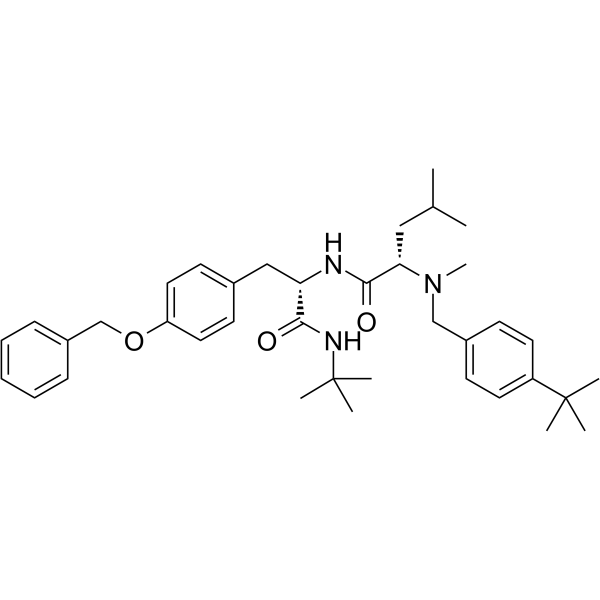 0 ImagesPD173212 is a selective N-type voltage sensitive calcium channel (VSCC) blocker, with an IC50 of 36 nM in IMR-32 assays.
-
L-Phenylalanine-13C
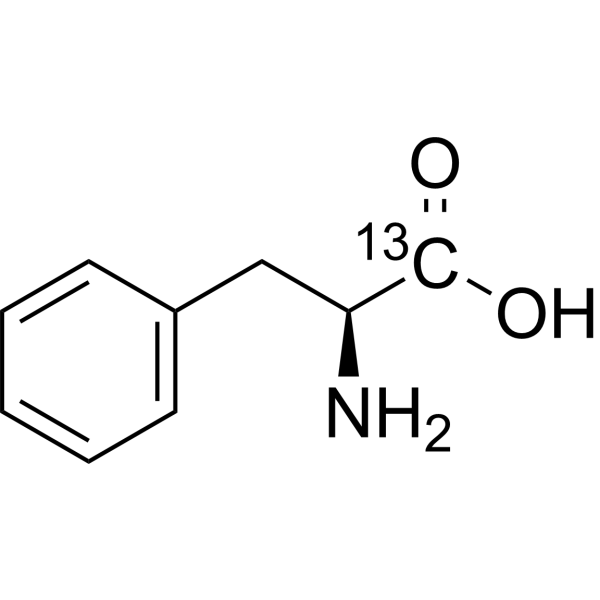 0 ImagesSynonyms: (S)-2-Amino-3-phenylpropionic acid-13CL-Phenylalanine-13C is the 13C-labeled L-Phenylalanine. L-Phenylalanine ((S)-2-Amino-3-phenylpropionic acid) is an essential amino acid isolated from Escherichia coli. L-Phenylalanine is a α2δ subunit of voltage-dependent Ca+ channels antagonist with a Ki of 980 nM. L-phenylalanine is a competitive antagonist for the glycine- and glutamate-binding sites of N-methyl-D-aspartate receptors (NMDARs) (KB of 573 μM ) and non-NMDARs, respectively. L-Phenylalanine is widely used in the production of food flavors and pharmaceuticals.
-
Verapamil hydrochloride (Standard)
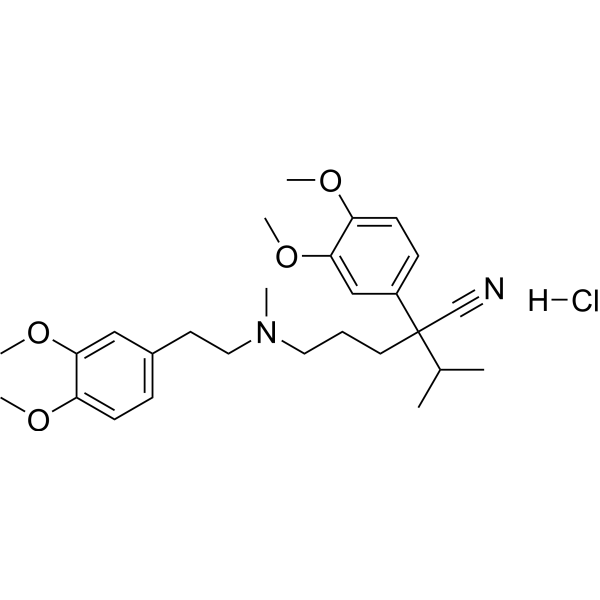 0 ImagesSynonyms: (±)-Verapamil hydrochloride (Standard); CP-16533-1 hydrochloride (Standard)Verapamil (hydrochloride) (Standard) is the analytical standard of Verapamil (hydrochloride). This product is intended for research and analytical applications. Verapamil hydrochloride ((±)-Verapamil hydrochloride) is a calcium channel blocker and a potent and orally active first-generation P-glycoprotein (P-gp) inhibitor. Verapamil hydrochloride also inhibits CYP3A4. Verapamil hydrochloride has the potential for high blood pressure, heart arrhythmias and angina research.
-
Nifedipine (Standard)
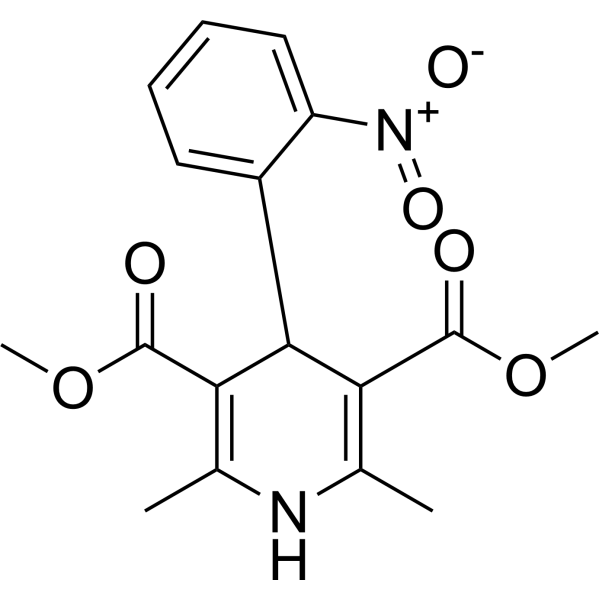 0 ImagesSynonyms: BAY-a-1040 (Standard)Nifedipine (Standard) is the analytical standard of Nifedipine. This product is intended for research and analytical applications. Nifedipine (BAY-a-1040) is a potent calcium channel blocker and agent of choice for cardiac insufficiencies.
-
Propiverine hydrochloride
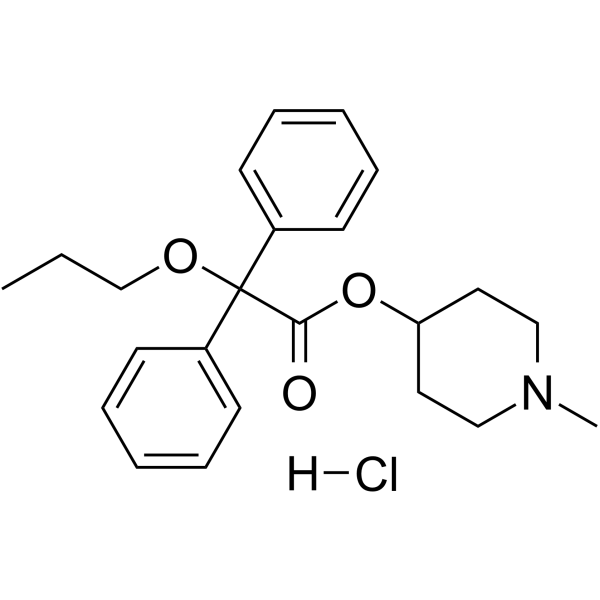 0 ImagesPropiverine hydrochloride is a bladder spasmolytic with calcium antagonistic and anticholinergic properties. Propiverine hydrochloride can be used for the research of overactive blaqdder and urinary incontinence.
-
Gallopamil hydrochloride
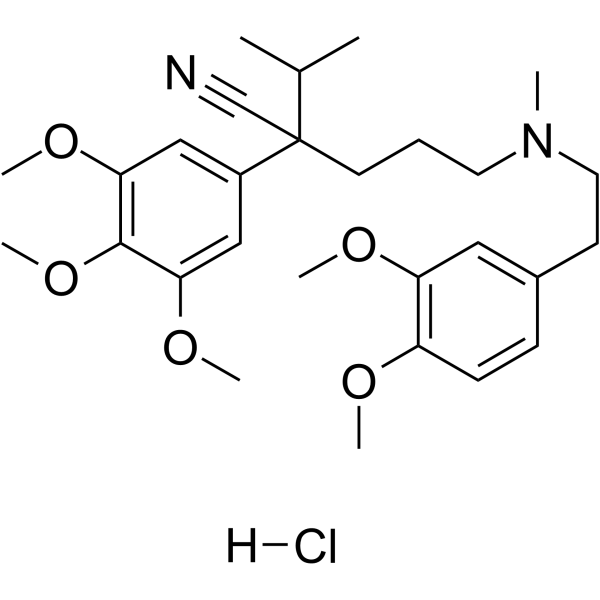 0 ImagesSynonyms: Methoxyverapamil hydrochlorideGallopamil hydrochloride (Methoxyverapamil hydrochloride), a methoxy derivative of Verapamil, is a phenylalkylamine calcium antagonist. Gallopamil hydrochloride inhibits acid secretion in a concentration-dependent manner with an IC50 of 10.9 μM. Gallopamil hydrochloride is a potent antiarrhythmic and vasodilator agent.
-
(R)-Nimodipine
 0 ImagesSynonyms: (R)-BAY-e 9736(R)-Nimodipine ((R)-BAY-e 9736) is an orally active, blood-brain barrier-permeable L-type calcium channel blocker with an IC50 of 5 nM. (R)-Nimodipine inhibits corticosterone release by blocking calcium channels on the hypothalamic-pituitary-adrenal axis, thereby reversing immobilization stress-induced memory impairment and behavioral abnormalities. (R)-Nimodipine is widely used in studies related to aneurysmal subarachnoid hemorrhage, cerebral ischemia, epilepsy, age-related degenerative neurological diseases, and alcohol intoxication.
-
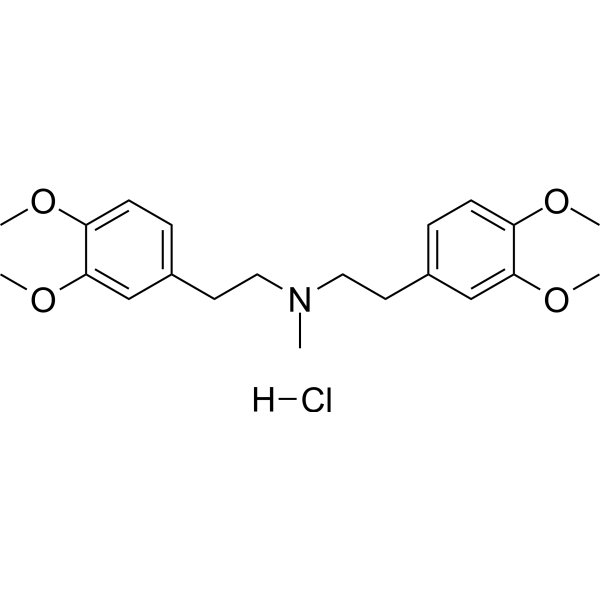
Drotaverine hydrochloride
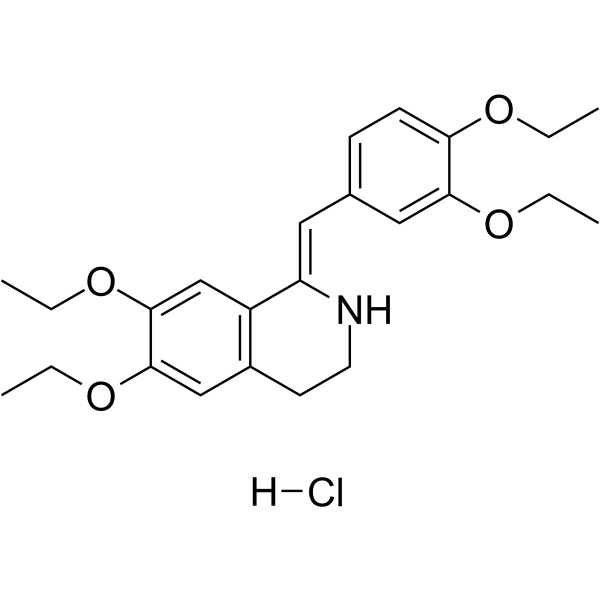 0 ImagesDrotaverine hydrochloride is a type 4 cyclic nucleotide phosphodiesterase (PDE4) inhibitor and an L-type voltage-dependent calcium channel (L-VDCC) blocker, blocks the degradation of 3',5'-cyclic adenosine monophosphate. Drotaverine (hydrochloride) exhibits in vivo antispasmodic efficacy without anticholinergic effects.
-
(S)-Nimodipine
 0 ImagesSynonyms: (S)-BAY-e 9736(S)-Nimodipine ((S)-BAY-e 9736) is an enantiomer of Nimodipine. Nimodipine (BAY-e 9736) is an orally active, well-tolerated and light-sensitive dihydropyridine calcium antagonist. Nimodipine can be used for the research of cerebrovascular disorders.
-
Praeruptorin C
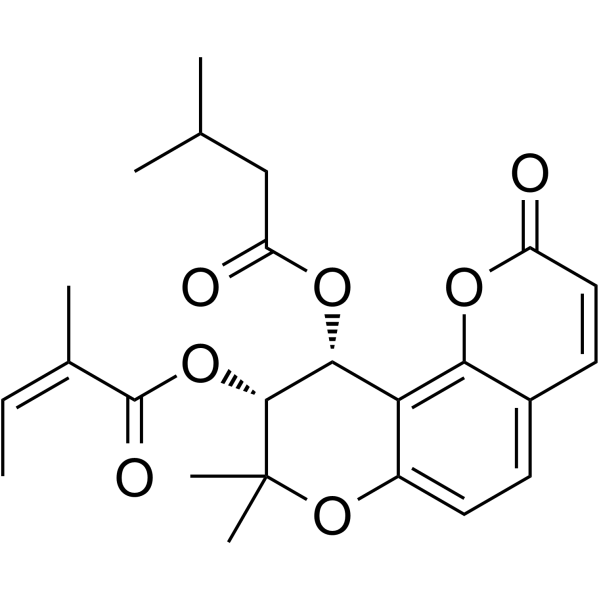 0 ImagesPraeruptorin C is a main bioactive constituent of Peucedanum praeruptorum (also known as Bai-Hua Qian Hu). Praeruptorin C is a calcium antagonist with pD2′ value of 5.7.
-
Verapamil (Standard)
 0 ImagesSynonyms: (±)-Verapamil (Standard); CP-16533-1 (Standard)Verapamil (Standard) is the analytical standard of Verapamil. This product is intended for research and analytical applications. Verapamil ((±)-Verapamil) is a calcium channel blocker and a potent and orally active first-generation P-glycoprotein (P-gp) inhibitor. Verapamil also inhibits CYP3A4. Verapamil has the potential for high blood pressure, heart arrhythmias and angina research.
-
Diltiazem-d3 hydrochloride
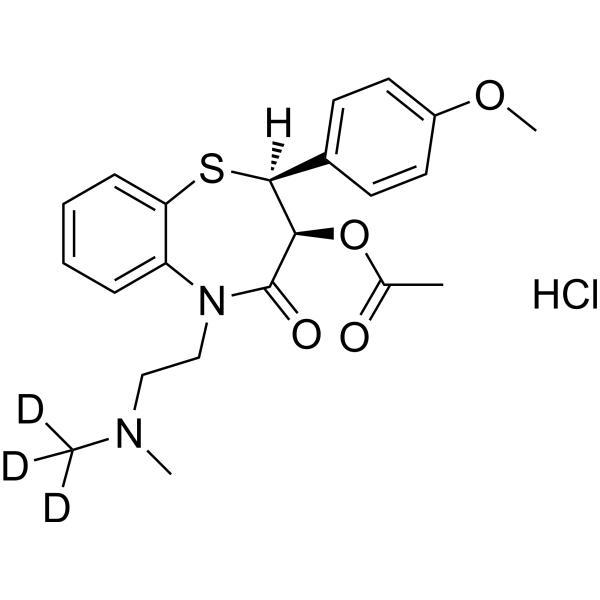 0 ImagesDiltiazem-d3 (hydrochloride) is the deuterium labeled Diltiazem hydrochloride. Diltiazem hydrochloride is a Ca2+ influx inhibitor (slow channel blocker or calcium antagonist)[1][2].
-
Clopimozide
 0 ImagesClopimozide is an orally active antischizophrenic agent that inhibits [3H]nitrendipine binding with IC50 value of 17 nM. Clopimozide is a calcium channel antagonist. Clopimozide can be used for the research of negative and positive schizophrenic symptoms.
-
L-Phenylalanine-15N,d8
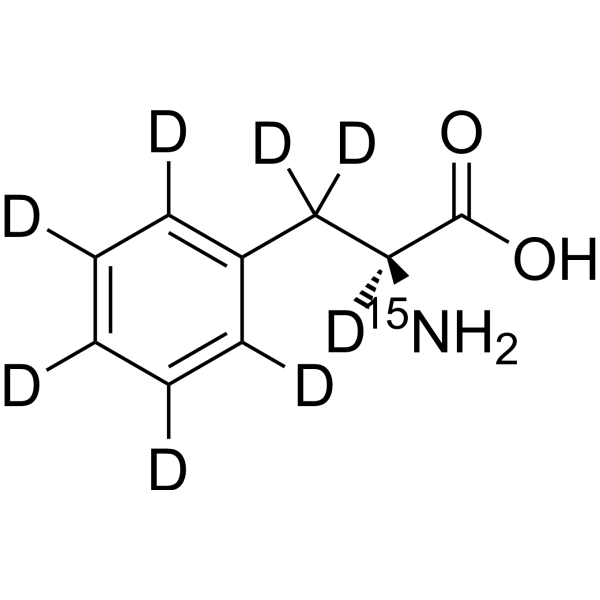 0 ImagesCat. No.: HY-N0215S14Purity: 99.90%Synonyms: (S)-2-Amino-3-phenylpropionic acid-15N,d8L-Phenylalanine-15N,d8 is the deuterium and 15N-labeled L-Phenylalanine. L-Phenylalanine ((S)-2-Amino-3-phenylpropionic acid) is an essential amino acid isolated from Escherichia coli. L-Phenylalanine is a α2δ subunit of voltage-dependent Ca2+ channels antagonist with a Ki of 980 nM. L-phenylalanine is a competitive antagonist for the glycine- and glutamate-binding sites of N-methyl-D-aspartate receptors (NMDARs) (KB of 573 μM ) and non-NMDARs, respectively. L-Phenylalanine is widely used in the production of food flavors and pharmaceuticals.
-
BTT-266
 0 ImagesBTT-266 is an antagonist forcalcium channel, through suppression of the CaVα1-AID-CaVβ3 interaction, with a Ki of 1.4 μM. BTT-266 modulates the activation of voltage-dependent CaV2.2. BTT-266 exhibits analgesic efficacy against neuropathic pain in rats model.
-
Anipamil
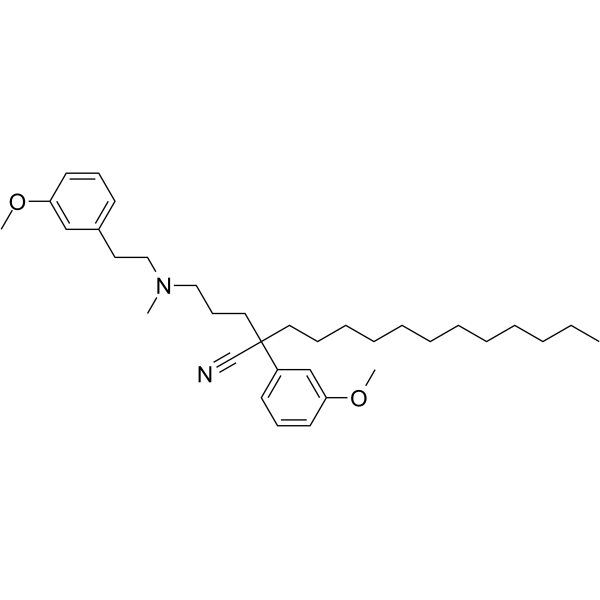 0 ImagesAnipamil is a long-acting calcium channel blocker, used for the treatment of cardiovascular disease.
-
Amlodipine-d4
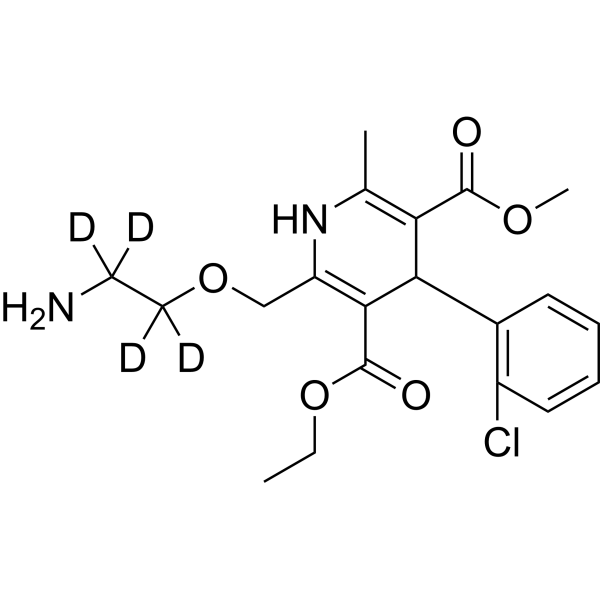 0 ImagesAmlodipine-d4 is a deuterium labeled Amlodipine (HY-B0317). Amlodipine, an antianginal agent and an orally active dihydropyridine calcium channel blocker, works by blocking the voltage-dependent L-type calcium channels, thereby inhibiting the initial influx of calcium. Amlodipine can be used for the research of high blood pressure and cancer.
-
Flavoxate
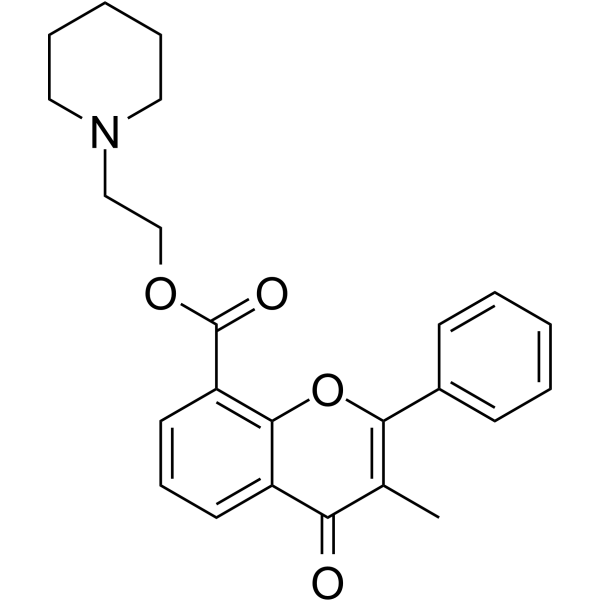 0 ImagesSynonyms: Rec-7-0040 free base; DW61 free baseFlavoxate (Rec-7-0040 free base; DW61 free base) is an orally active L-type Ca2+ channel inhibitor and antispasmodic. Flavoxate inhibits cyclic adenosine monophosphate production by blocking voltage-dependent inward Ba2+ currents, regulating the brainstem micturition center, and stimulating G protein-coupled receptors. Consequently, Flavoxate induces relaxation of bladder smooth muscle and inhibits isovolumetric rhythmic contractions. Flavoxate effectively increases bladder capacity and alleviates symptoms of urgent urination frequency and pollakiuria caused by overactive bladder. Flavoxate can be used in research on overactive bladder and related voiding dysfunctions.




